


When you pitch options to a local business —a clinic, a restaurant, a neighborhood shop— they almost always need the same things: a site that loads fast, looks good on mobile, shows up on Google and, depending on the business, an online shop or a way to book an appointment. Rebuilding that from scratch for every client is a waste of time. So I built Showcase: a clean, reusable base I adapt to each one.
The idea
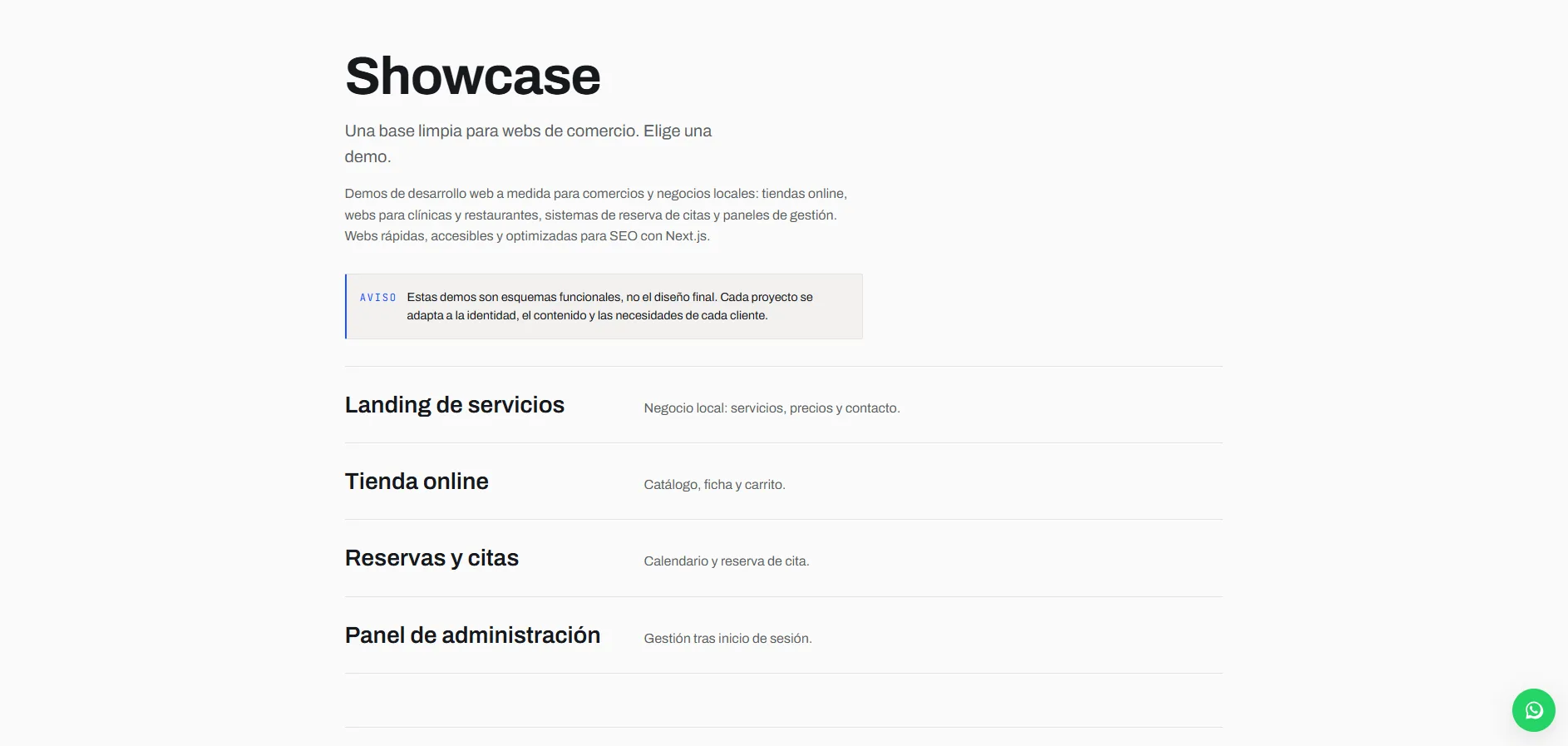
A single template with the four pieces local businesses ask for most, each a working demo:
- Services landing — local business with services, pricing and contact.
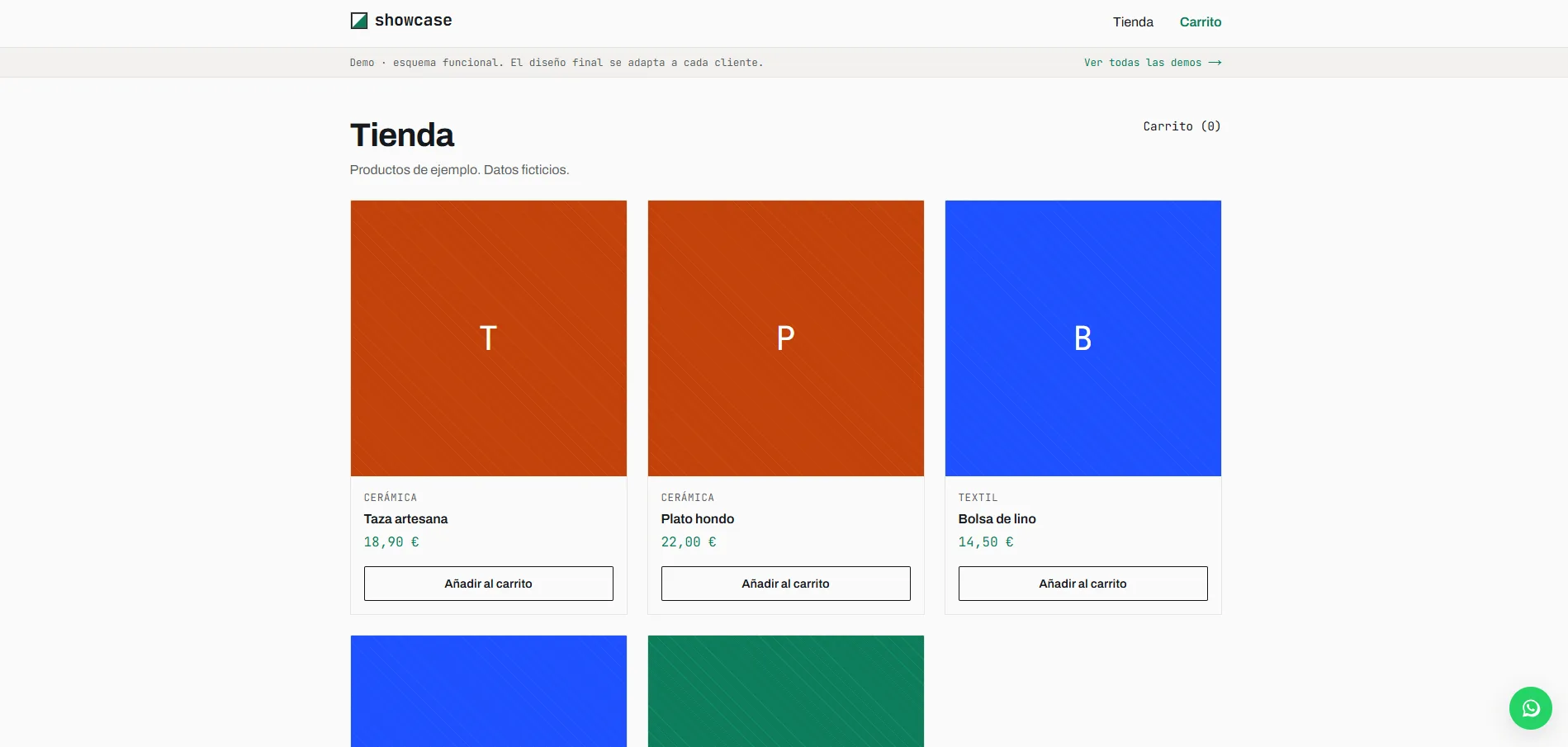
- Online shop — catalog, product page and cart.
- Appointment booking — calendar and booking flow.
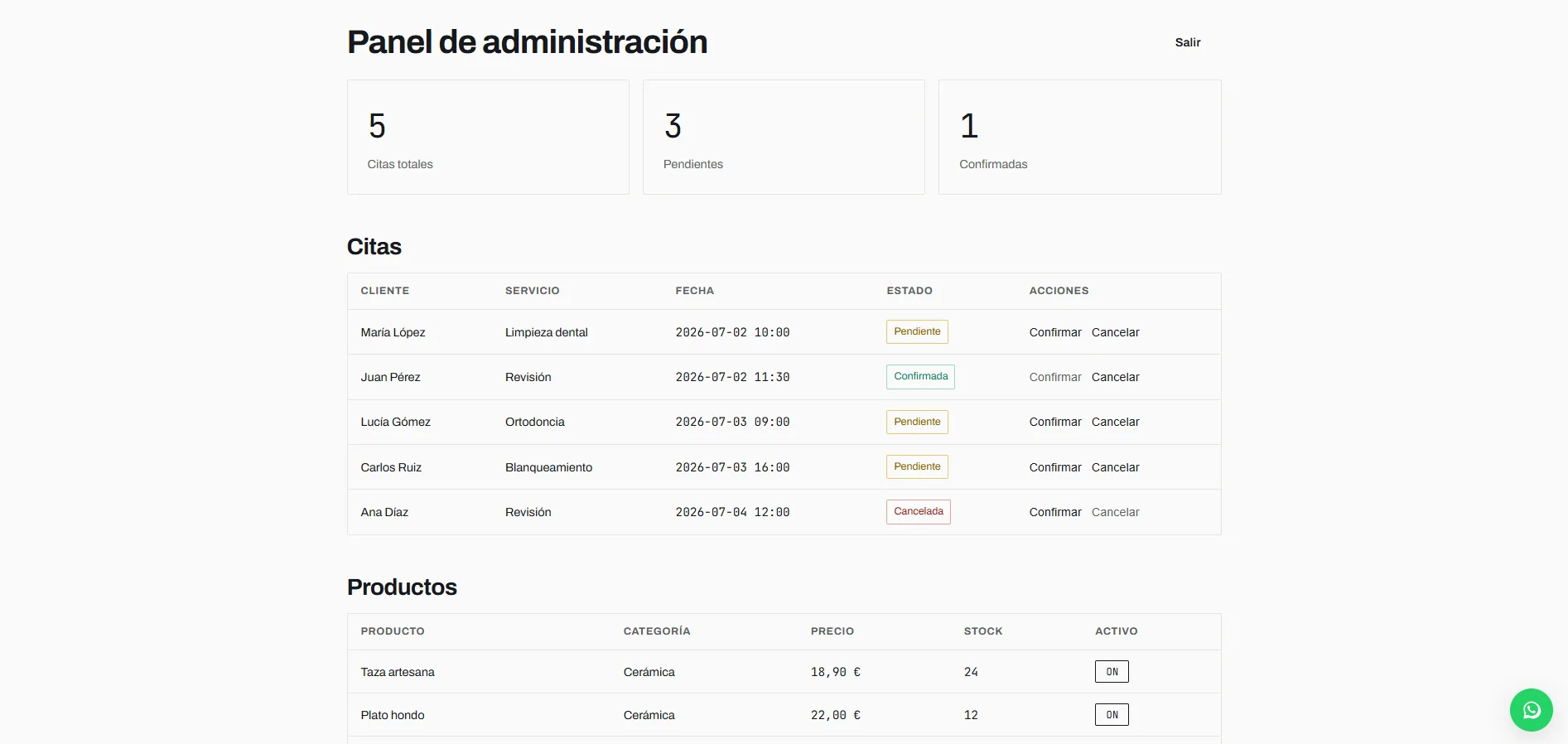
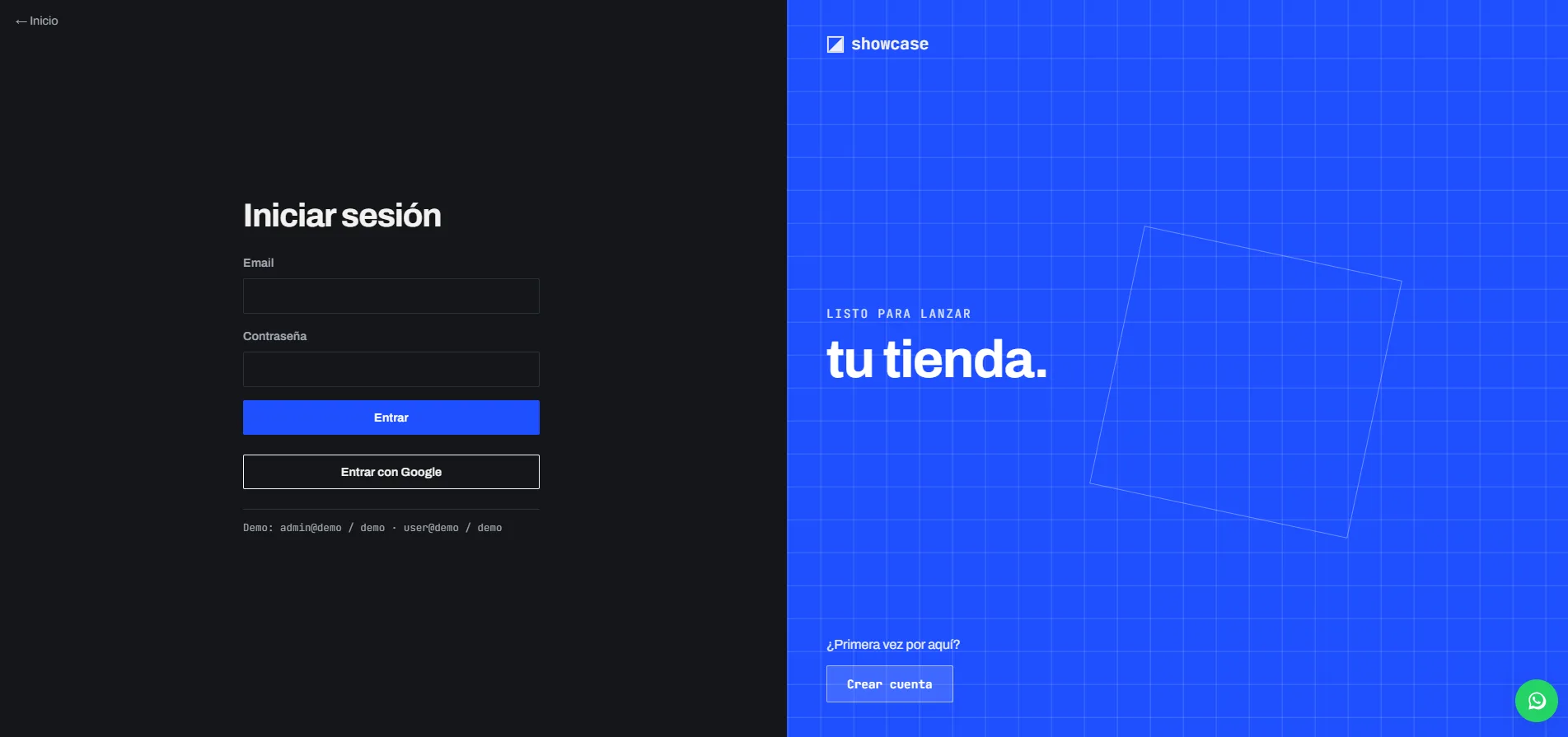
- Admin panel — manage appointments and products behind a login.
The demo is here. These are functional schemes, not the final design: each project is adapted to the client's identity, content and needs.
The stack
- Next.js + TypeScript — App Router, server rendering and static routes where it makes sense.
- Modular SCSS with a Container/Layout pattern to separate logic from presentation.
- next-intl — bilingual (ES/EN) from day one.
- Auth with login for the admin panel.
- SEO done right: metadata, Open Graph and structured data.
Why a template and not WordPress
A local business doesn't need the weight or plugins of a generic CMS. It needs a site that is fast, accessible and ranks well — I've written about why a custom website beats WordPress. Starting from my own base gives me full control over performance (high Lighthouse, sub-second loads) and lets me ship faster: I swap brand, colors, fonts, content and verticals from centralized points, without rewriting the architecture.
And to be clear: the template is the starting point, not the product. The final design, sections and features are decided by each client; the base just saves me the part nobody sees.
What I take away
- Building for reuse changes the design: centralizing brand, copy, data and themes forces a clean split between what changes and what doesn't.
- Fewer pieces, more speed. With no heavy CMS, the site flies and maintenance is trivial.
- A solid base sells better: showing a real, working demo convinces more than a proposal on paper.
The technical detail and screenshots are on the project page. Have a business and want something like this? Write to me.